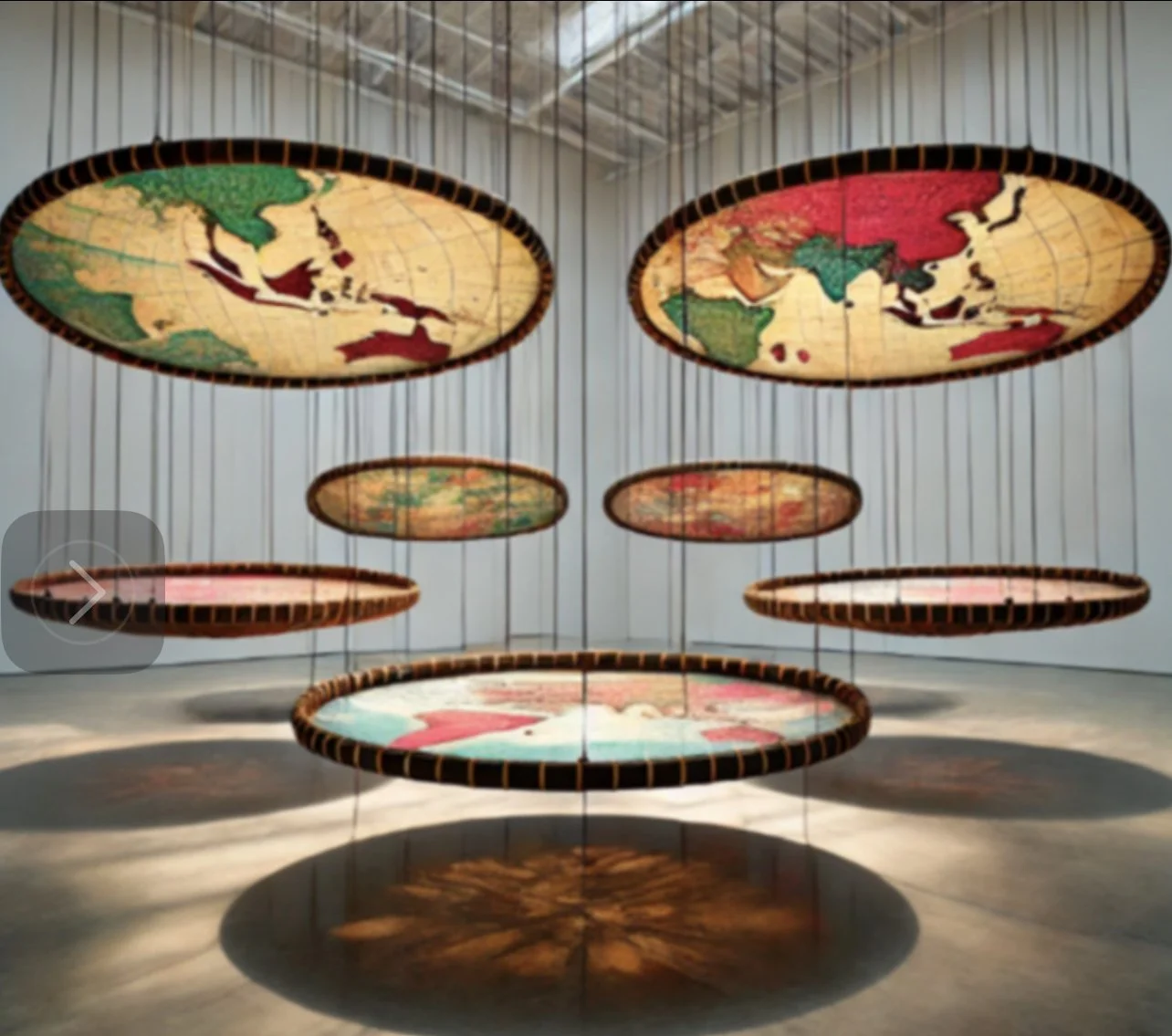
The Stateless Mind Pavilion at the 16th Gwangju Biennale
Short Presentation
At the invitation of the 16th Gwangju Biennale, the artist-run Stateless Mind Pavilion, initiated by Amir Zainorin and developed from earlier projects under Jambatan (Copenhagen, 2008), now continues as a transnational platform through collaborations across Malaysia, Denmark, Finland, and wider international contexts, including CAD+SR (US/FI) and Kapallorek Art Space (MY), presenting an exhibition platform bringing together artists across different contexts.
The project explores belonging, displacement, and statelessness as lived conditions rather than fixed identities.
Conceived as an extended dialogue, the Pavilion moves beyond reductive categories such as citizen or migrant, foregrounding diverse histories, geographies, and ways of working. Artistic contributions span installation, sound, performance, and public events, including participatory processions that engage local communities.
Rooted in collaboration and shared making, the Pavilion reflects a transnational approach shaped through movement across Southeast Asia, Denmark, Europe, and beyond.
Project Description
Stateless Mind Pavilion Gwangju is an artist-run platform developed through ongoing international collaboration.
Building on the Stateless Mind Festivals (2019–2023), the Pavilion operates as a mobile curatorial framework engaging statelessness as a lived condition—shaped through movement, language, and memory.
For the 16th Gwangju Biennale, the Pavilion functions as a temporary public site of encounter, combining installation, live actions, sound, and a procession-based format titled Stateless Procession.
Participating artists activate the space through performative gestures, shared rituals, readings, and collective situations that invite audiences into practices of attention, care, and dialogue.
Intentionally lightweight and adaptable, the Pavilion allows diverse voices and cultural experiences to articulate their particularities without imposing a singular narrative.
Conceived as a social sculpture, it becomes a space where identities—and the ideas that shape them—are continuously assembled and reimagined.
Collaboration
The project is built through transnational collaboration between:
Jambatan (Copenhagen)
CAD+SR (US/FI)
Kapallorek Art Space (MY)
alongside a broader network of artists, curators, and partners across regions.
The Pavilion develops through:
shared curatorial authorship
joint decision-making
distributed production
Responsibilities are shared across:
programming
artist coordination
technical planning
communication
documentation'
The Gwangju Biennale serves as a site for testing and extending this collaborative model across different contexts.
Working Approach
The Pavilion does not represent a fixed regional identity.
It operates through:
collaboration across geographies
non-hierarchical working processes
responsiveness to local context
This approach reflects ways of working that emerge across Southeast Asia, Denmark, Europe, and beyond, without privileging a single framework.
Background
Stateless Mind Pavilion situates itself within contemporary artist-led curatorial practice, combining:
installation
performance
socially engaged art
public-space intervention
The project builds on:
Stateless Mind Pavilion
Kapallorek Art Space, Malaysia (2024)Lintas Benua (Crossing Continents) residency
(2025)Stateless Mind Pavilion
Museo delle Mura, Rome (2026)Stateless Mind Festivals (2019–2023)
It contributes to ongoing discussions on:
migration and displacement
post-national identities
alternative artist-run infrastructures