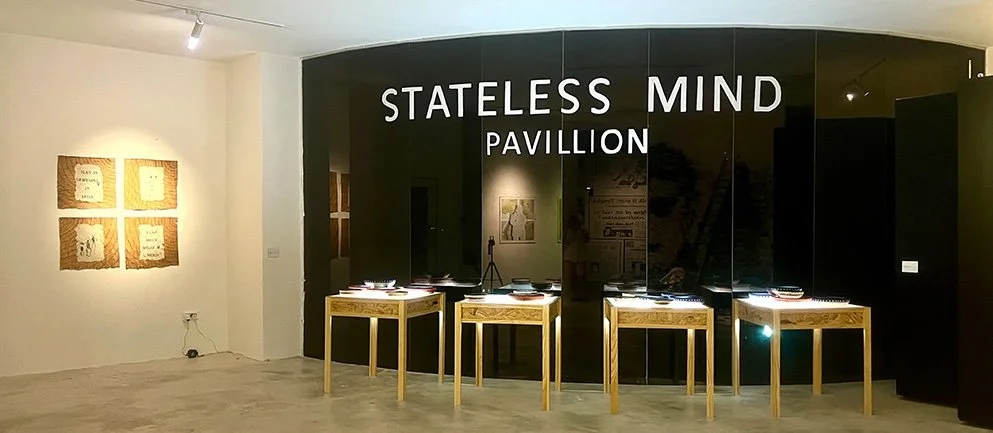
An evolving platform for artistic practice, dialogue and public engagement.
The Stateless Mind Pavilion is an evolving platform that brings together artists, curators, researchers and communities through exhibitions, performances, publications and public programmes.
Rather than functioning as a national pavilion or a fixed institution, the Pavilion adapts to different places, contexts and collaborations. Each iteration responds to its environment while remaining connected through a shared commitment to artistic exchange, lived experience and long-term relationships.
The Pavilion understands exhibitions not as isolated events but as moments within an ongoing process of research, dialogue and collaboration.
How It Emerged
The idea of the Pavilion took shape in 2022, during Amir Zainorin’s curatorial involvement in PORT Perak’s participation in the 59th Venice Biennale. During the planning of a collateral event, it became clear that the term “pavilion” was reserved for official national representations.
This restriction created a point of friction.
Rather than working within that limitation, the project adopted the name Stateless Mind Pavilion—reclaiming the term as a self-defined position.
Not tied to a nation, but to a condition: working across, between, and outside fixed frameworks.
A Different Kind of Pavilion
The Stateless Mind Pavilion does not represent a nation.
It represents a way of practising.
Each Pavilion is shaped by the people who participate, the places in which it unfolds and the relationships that develop over time.
Rather than presenting a single narrative, the Pavilion creates space for multiple perspectives to coexist, allowing artists to respond to place through conversation, experimentation and shared experience.
Living Historiography
The Pavilion understands artistic practice as a form of living historiography.
History is not treated as a fixed record of the past, but as something continually rewritten through movement, encounters, materials and everyday experience.
Each exhibition becomes another chapter in an ongoing conversation rather than a final statement. The Pavilion therefore values process as much as presentation, recognising that artistic meaning often emerges through the relationships formed before, during and after an exhibition.
Our Practice
Every Stateless Mind Pavilion develops through the same principles.
Time
Ideas emerge through sustained engagement rather than predetermined outcomes.
Place
Every location actively shapes the work rather than simply hosting it.
Relationships
Artists, curators, researchers and communities work together through dialogue, generosity and mutual learning.
Process
Research, conversation and experimentation remain as important as public presentation.
First Activation
The Pavilion was first activated during Amir Zainorin’s solo exhibition at Kapallorek Art Space in Malaysia in 2024. This presentation included an archive of the Stateless Mind Festivals, positioning the Pavilion as both:
· a reflection on past activities
· and a framework for future development
Recent Chapters
The Stateless Mind Pavilion continues to move and evolve:
2026, September – November 20
16th Gwangju Stateless Mind Pavilion
Gwangju, South Korea
→ Stateless Mind Pavilion Gwangju
2026
Stateless Mind Pavilion
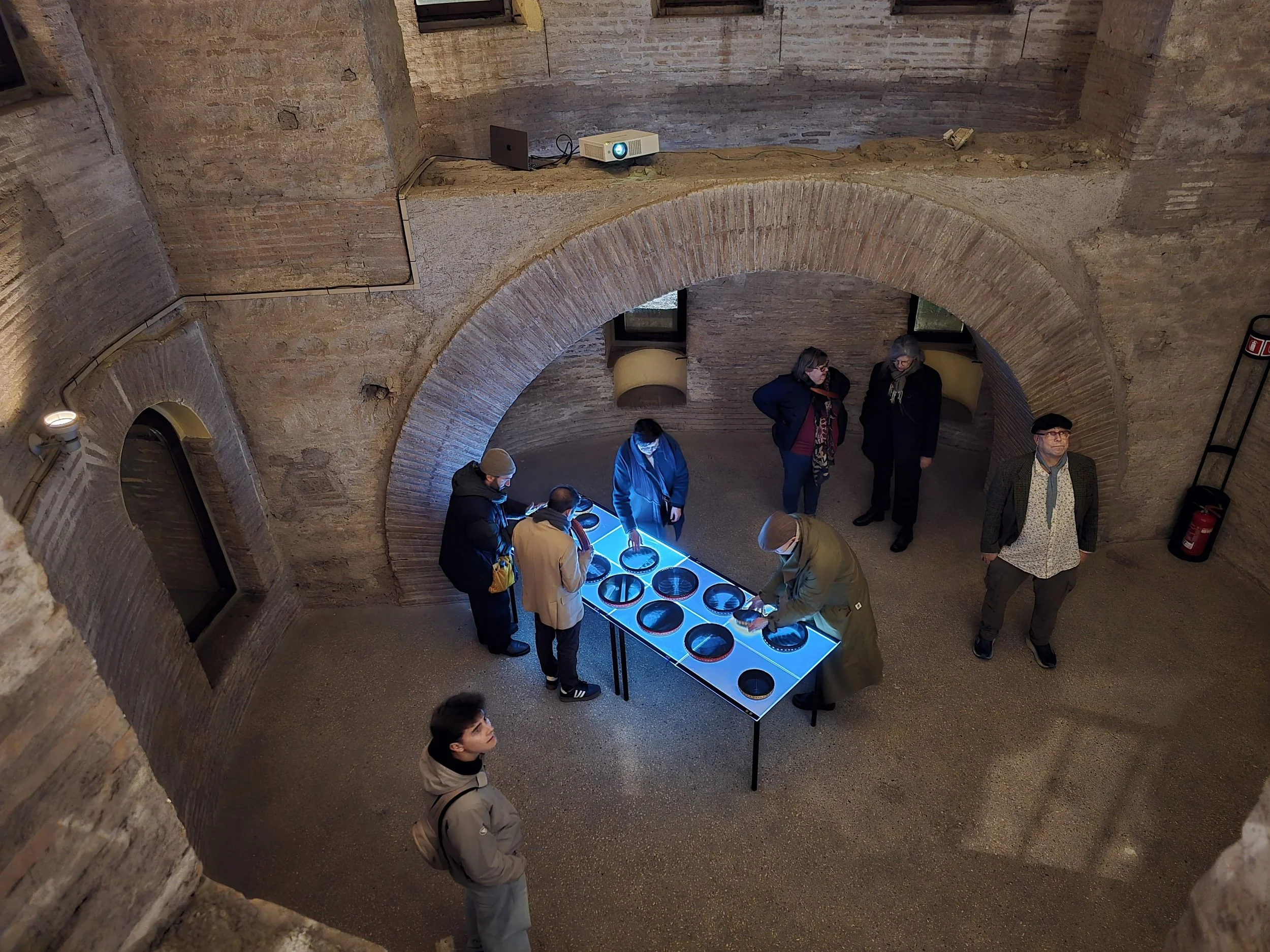
Museo delle Mura, Rome
2025
Stateless Mind Pavilion
Reflection Mode
Lintas Benua Residency, Langkawi
2024
Stateless Mind Pavilion — First Activation
Kapallorek, Malaysia
Looking Forward
The Stateless Mind Pavilion is not intended to become a permanent institution.
It remains deliberately flexible, evolving through invitations, collaborations and new encounters.
Rather than leaving behind monuments, each Pavilion leaves behind relationships.
Each chapter contributes to an evolving practice that continues long after the exhibition itself has ended.
About the Name
The name Stateless Mind reflects an ongoing interest in ways of thinking and working that move across national, institutional and disciplinary boundaries.
Rather than defining a particular identity, it describes a practice that remains open to different places, people and perspectives.